
Synthetic RNA Nanoparticle Platform
Rational design and self-assembly of thermodynamically stable multi-way junction RNA cores (3WJ, 4WJ, 6WJ) programmed for targeted therapeutics, imaging, and multivalent molecular display.
From Sequence-Guided Design to Functional Nanorobots
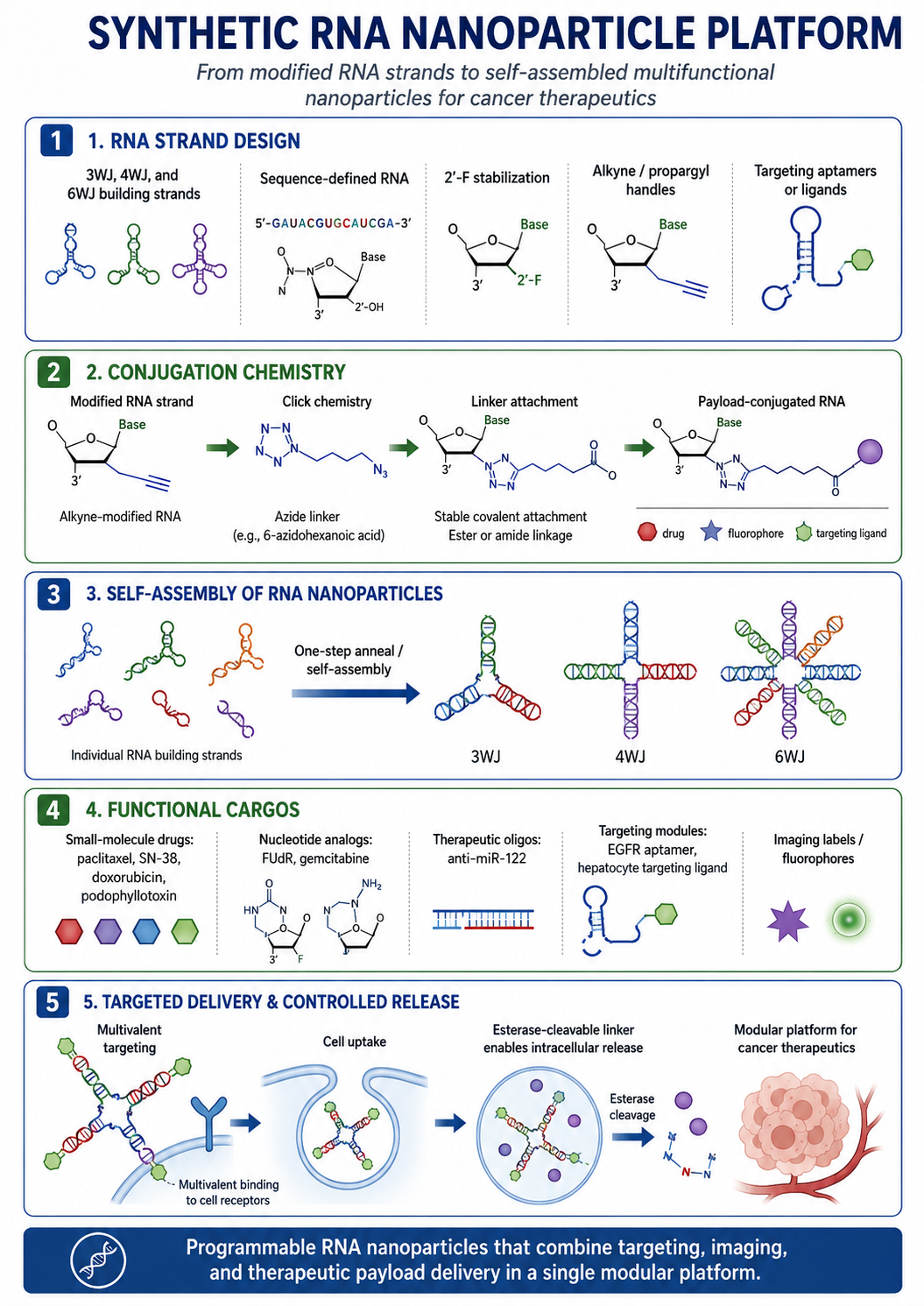
Individual RNA strands are sequence-engineered to recognize one another and spontaneously self-assemble into defined nanoscale architectures. Rather than encapsulating payloads in random synthetic polymers or lipid nanoparticles, the RNA architecture itself serves as the scaffold.
Each branch of the multi-way junction core can be dedicated to a specific biological task: cell-surface receptor targeting, nuclease-resistant stabilization, fluorophore tracking, gene regulation (siRNA / miRNA), or covalent drug delivery with cleavable release mechanisms.
Architecture & Validation
Platform Foundations
From Purified RNA Strands to a Functional Nanoparticle
The individual strands are only the beginning. After purification, the components are combined in defined ratios and annealed under conditions that favor the intended base-pairing and tertiary structure. Functional modules are positioned so they remain accessible after assembly.
Strand Preparation
Prepare and quantify each component strand with sequence-verified purity.
Stoichiometric Mixing
Combine strands at the exact designed stoichiometric ratio in assembly buffer.
Controlled Annealing
Anneal or incubate under architecture-specific thermal or isothermal conditions.
Particle Separation
Separate the assembled particle from excess strands or aggregates when needed.
Quality Assessment
Confirm assembly, homogeneity, stability, and biological function via native PAGE & DLS.
Experimental Workflows
Assembly Protocols
Protocol: Multi-Junction 4WJ RNA Nanoparticle Assembly
Nature Protocols (2026)1. Mix the Strands
Combine the four RNA strands at an equal molar ratio in TES buffer.
2. Anneal the Nanoparticle
Heat the mixture to 95 °C for 5 minutes, then gradually cool it to 4 °C over 1 hour. Slow cooling allows complementary regions of the four strands to form the intended four-way junction.
3. Confirm Assembly
Analyze the mixture using 12% native PAGE in TBE buffer at 120 V for 1 hour. Compare the assembled product with individual strands and partial two- or three-strand assemblies. The complete 4WJ forms a distinct, slower-migrating band.
4. Purify the Assembled 4WJ
Run preparative 12% native PAGE at 150 V for 1 hour, excise the complete 4WJ band, and elute the nanoparticle in RNA elution buffer containing 10 mM Mg²⁺ at 37 °C for 4 hours.
5. Recover and Reconstitute
Precipitate eluted RNA overnight at −20 °C using 2.5 volumes ethanol and 0.1 volume 3 M sodium acetate. Centrifuge at 16,500 × g for 30 min at 4 °C, wash with 70% ethanol, dry, and dissolve in TES buffer at ~1 µg/µL.
6. Final QC & Storage
Confirm nanoparticle formation by native PAGE before use. Additional characterization includes DLS, Tm analysis, and functional testing. Store at −20 °C for up to 6 months or −80 °C for long-term.
Source: Binzel DW, Jin K, Yudhistira T, and Guo P. Conjugation of hydrophobic drugs to motile pRNA 4WJ nanoparticles for spontaneous tumor targeting and undetectable toxicity. Nature Protocols (2026). DOI: 10.1038/s41596-025-01306-w.
Distinct Advantages
Why the RNA Nanorobotics Platform Is Different
Structure and Function Are Designed Together
We do not treat the RNA strand, conjugation chemistry, and final nanoparticle as separate projects. The finished assembly is considered from the first sequence design.
Defined Stoichiometry
The number and position of strands, ligands, dyes, and therapeutic modules are intentionally programmed rather than randomly distributed.
Site-Specific Modification
Chemical handles introduced at selected positions provide precise control over payload placement, reducing batch-to-batch variability.
Multiple Architectures
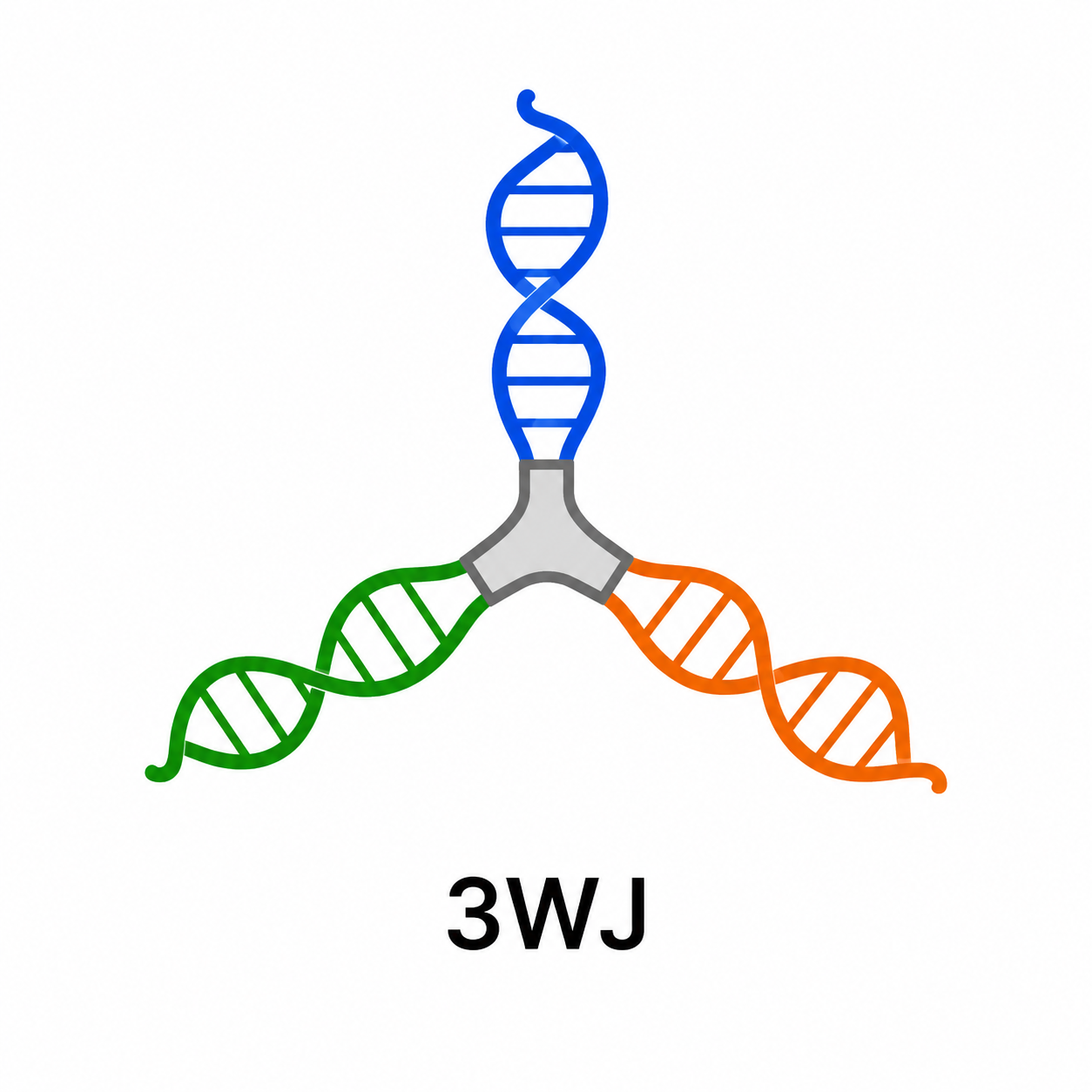
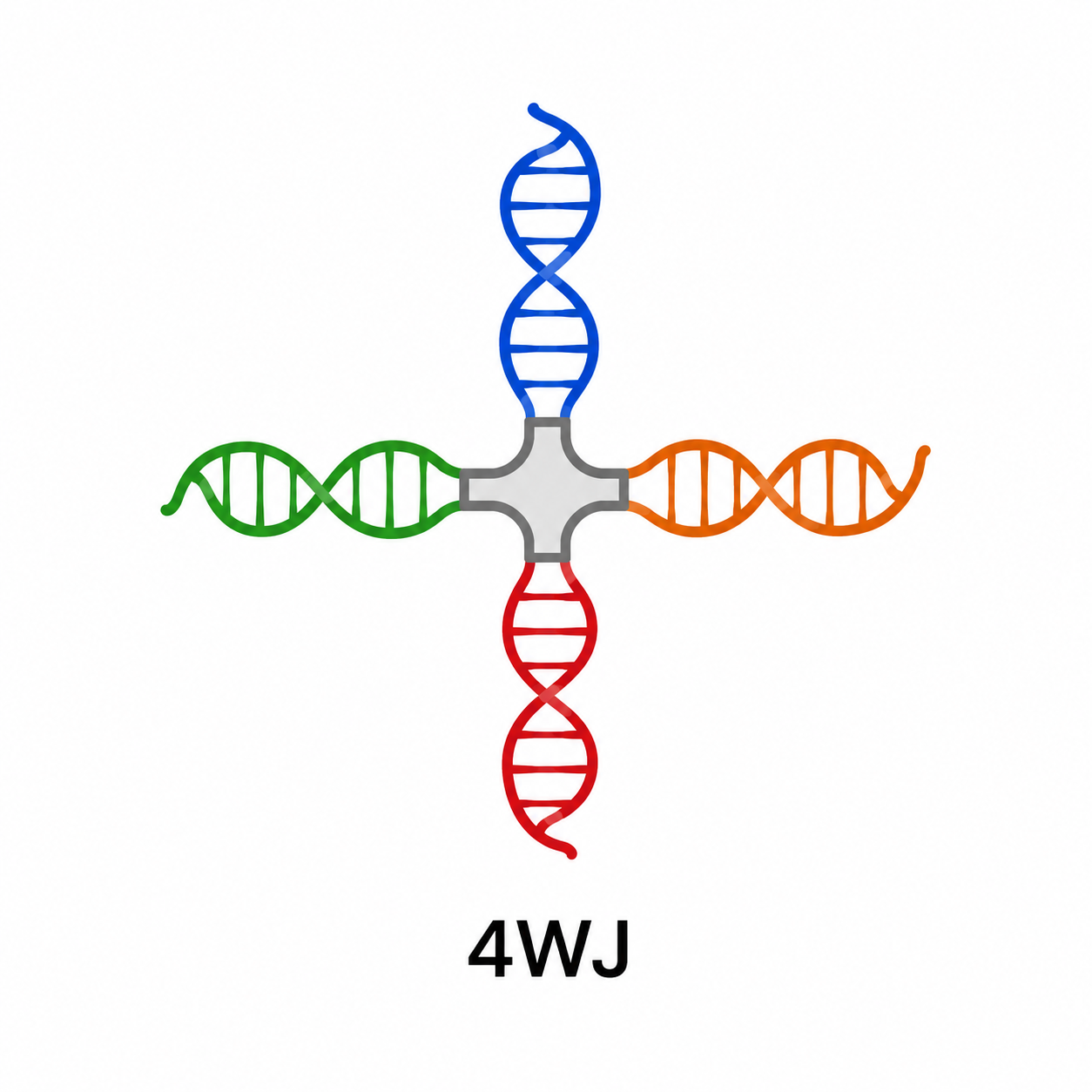
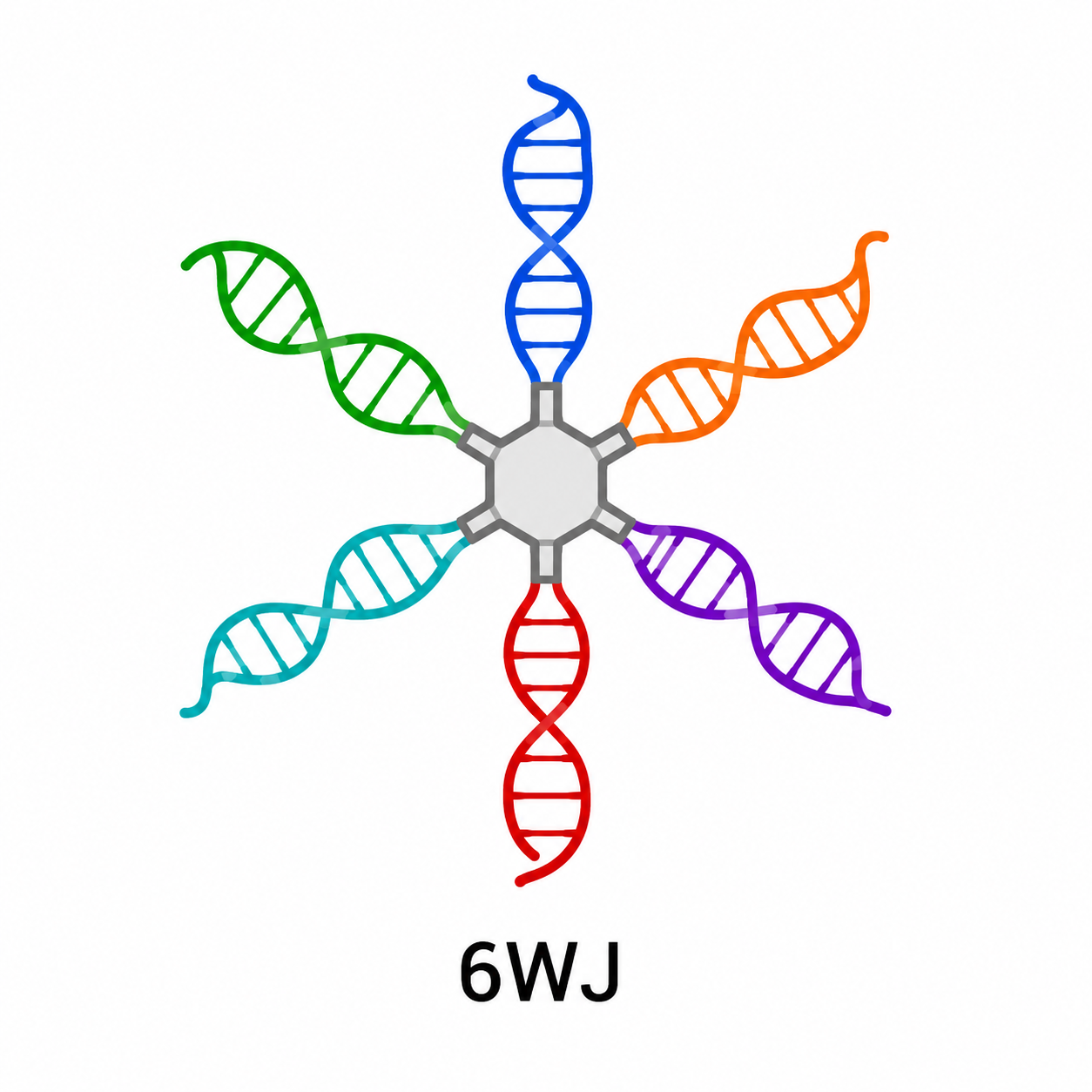
Projects can be built around 3WJ, 4WJ, 6WJ multivalent RNA nanoparticles, or custom rationally designed RNA structures.
Fit-for-Purpose Purification
Purification matches the chemistry of the product, including hydrophobic drug conjugates, labeled RNA, and assembled nanoparticles.
Multi-Attribute QC
Identity, purity, assembly, homogeneity, stability, and function are evaluated according to the intended downstream experiment.
Iterative Optimization
Long, highly modified, hydrophobic, or multicomponent constructs are supported by an adaptive development workflow.
Research Applications
Applications & Custom Programs
RNA Nanotechnology
- • 3WJ, 4WJ, and 6WJ assemblies
- • Structure–function studies
- • Multivalent display
- • Nanoparticle stability studies
Therapeutic Development
- • siRNA and anti-miRNA delivery
- • Aptamer-guided targeting
- • Small-molecule conjugates
- • Combination-cargo platforms
Imaging & Diagnostics
- • Fluorescent RNA constructs
- • Target-binding probes
- • Biodistribution studies
- • Radiolabel-ready designs
Drug Discovery
- • Ligand–receptor studies
- • Cellular uptake evaluation
- • Payload release studies
- • Mechanism-of-action research
Research Reagents
- • Custom modified RNA
- • Nanoparticle building strands
- • Functionalized aptamers
- • Defined RNA–drug conjugates
Custom Programs
- • Design-to-assay development
- • Construct screening
- • Assembly optimization
- • Method transfer support